Riri Riza States That LSF Must Become an Authoritative Institution
Jakarta, 30 March 2026 — In the past, the Film Censorship Board (BSF), the predecessor of the Indonesian Film Censorship Board (LSF), was considered by filmmaker Riri Riza to function more as an instrument of state ideology. He recalled that when directing Kuldesak in 1997, several scenes were cut without any dialogue process, and the decision had to be accepted if the film was to be screened in cinemas.
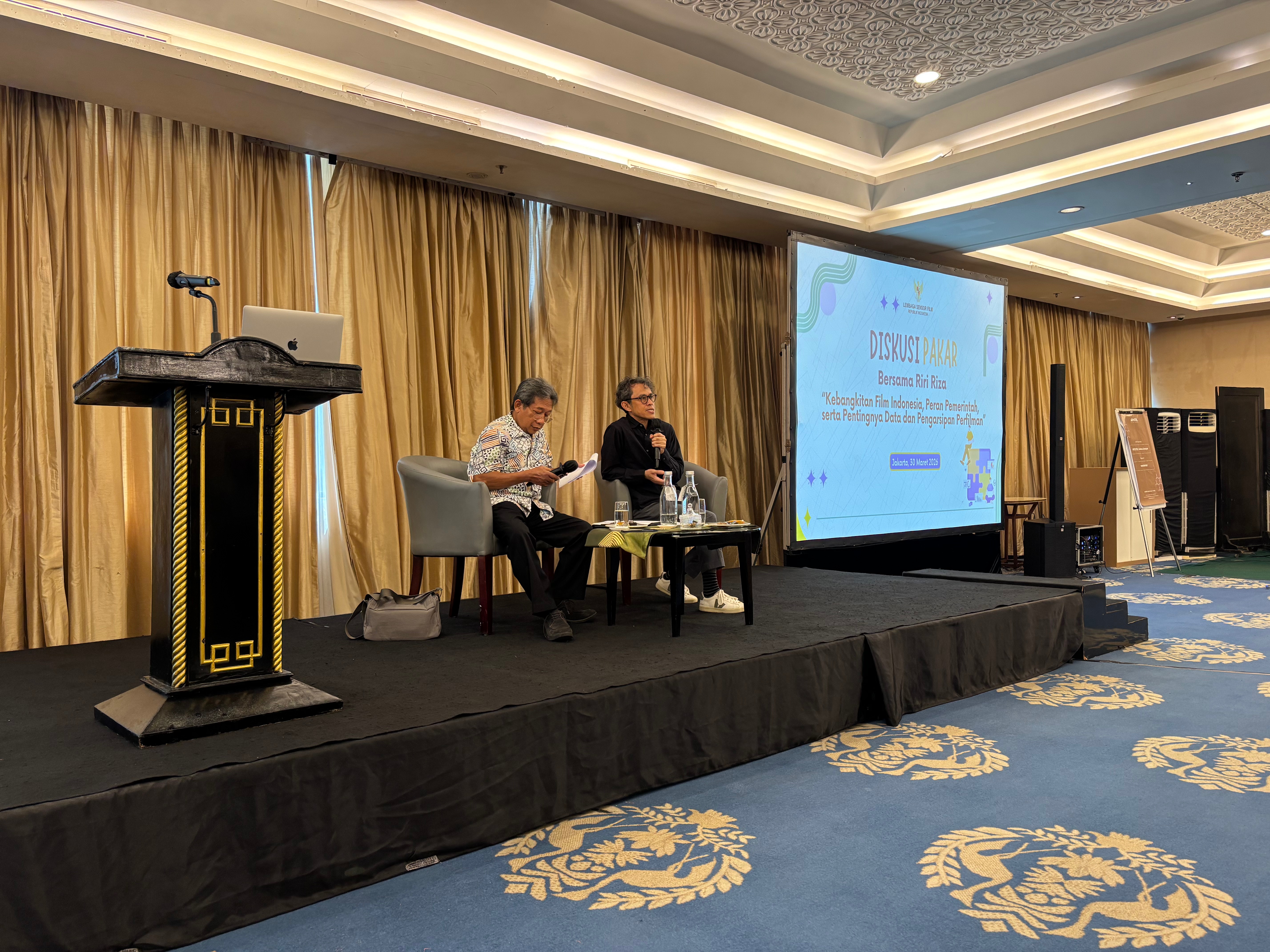
However, current conditions are significantly different, particularly with the shift in function from censorship to classification based on audience age. “Now we negotiate age classification, rather than simply determining whether a film can or cannot be watched,” said Riri, whose full name is Mohammad Rivai Riza, during the Expert Discussion titled “The Rise of Indonesian Film, the Role of Government, and the Importance of Data and Film Archiving” in Jakarta on Monday (30 March 2026).
He added that this transformation needs to be strengthened by a fundamental change in perspective. “My aspiration is for this institution to become an authoritative film classification body, not a film censorship institution,” he stated before participants in the discussion moderated by Head of the LSF Censorship Subcommission, Hadi Artomo.
Riri also traced the long history of the relationship between the state and film in Indonesia since the colonial era, noting a strong tendency from the outset to control film due to its significant influence on society. In the current era of openness, he emphasized the importance of transparency in LSF’s processes, including film submission procedures and cost structures that should be openly accessible to the public.
He further encouraged moving away from the term “censorship,” as it carries a strong connotation of control. He also noted that one of the current challenges is the absence of authority to determine classification for streaming platforms, as well as the potential threat of artificial intelligence (AI) to the creative industry, particularly screenwriters.
Previously, LSF Chair Naswardi reaffirmed the institution’s commitment to continue transforming into a more open, adaptive, and literacy-oriented organization. “We want the LSF secretariat office to become a center of literacy, a center of civilization, and a data hub that supports the advancement of our national film industry,” he stated.
LSF is expected not only to function as a censorship body, but also as a platform for dialogue involving various stakeholders, including producers, academics, and screenwriters. This effort aims to maintain public trust while improving the quality of the national film industry. (Rosalinda/Nuz)