Visiting Broadcasting Institutions, LSF Discusses Regulatory Equality
Jakarta, May 6, 2026 — Of the total 41,104 materials submitted to the Film Censorship Board of Indonesia (LSF RI) throughout 2025, the majority came from the television industry, amounting to 35,196 titles or nearly 85 percent. Meanwhile, theatrical films accounted for 545 titles, with the remainder originating from film festivals, information technology networks (JTI), and other categories.
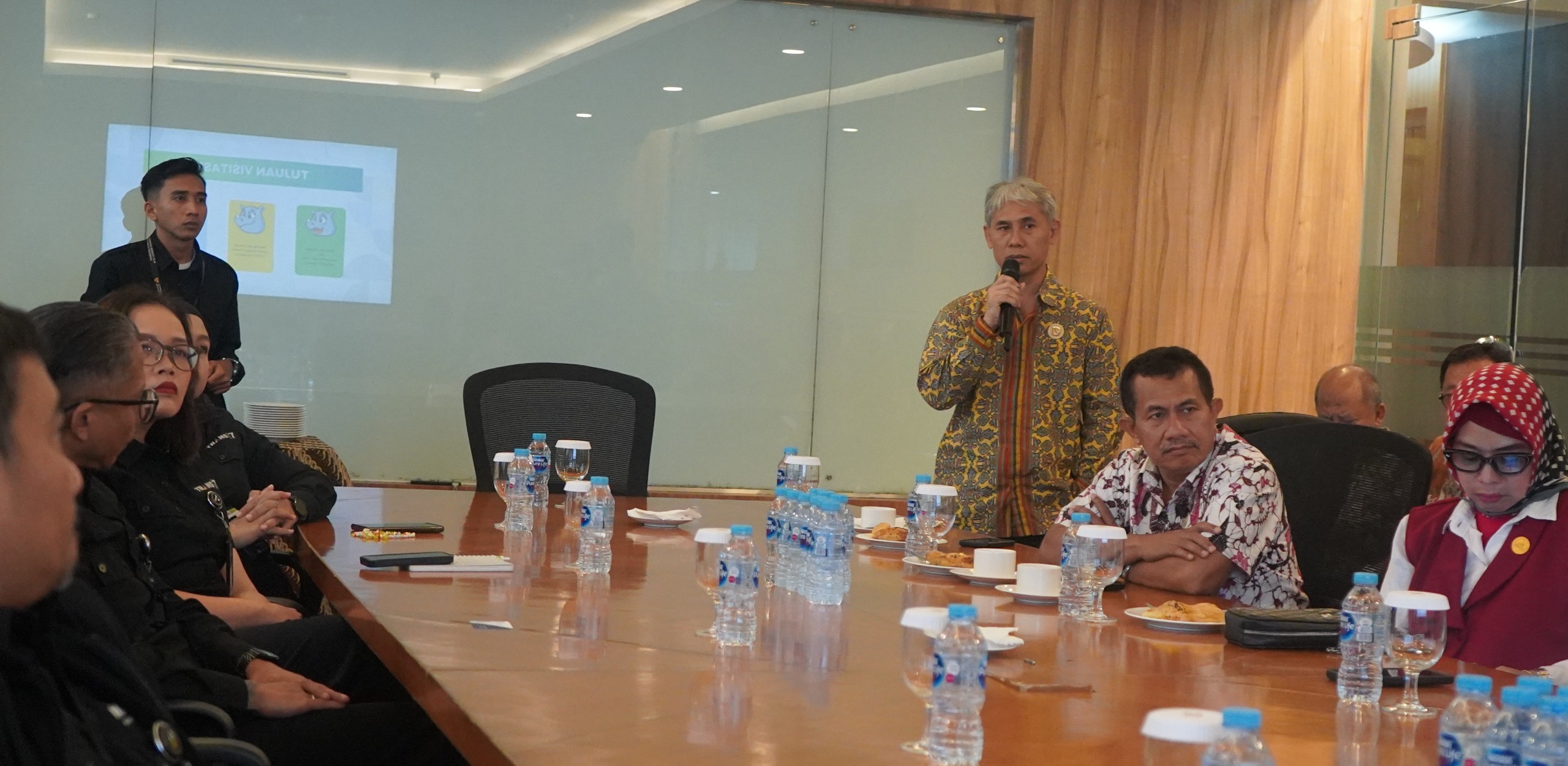
This was disclosed by Head of the LSF Dialogue Subcommission Widayat S Noeswa while presenting censorship performance data during LSF’s visit to Transmedia in Jakarta on Wednesday (May 6, 2026). Specifically, LSF recorded 3,313 censorship materials from Trans TV, placing it second highest among national television broadcasters, while Trans7 submitted 2,035 censorship materials.
In terms of content composition, national film productions dominated compared to imported films on both Trans TV and Trans7. However, imported films have shown growth in recent years, reflecting increasingly complex content competition dynamics.
Trans7 Production Director Ikhsan Mohammad stated that nearly all Transmedia programs are produced internally (in-house) and broadcast almost daily in a stripping format, resulting in a very high censorship volume requirement. At the same time, he highlighted what he described as unequal regulation between television content and content distributed through information technology networks or over-the-top (OTT) platforms. Television broadcasters are required to submit programs and advertisements for censorship under Article 47 of Law No. 32 of 2002 on Broadcasting, while OTT programs currently do not carry the same obligation.
“The television industry is currently supervised by four institutions: the Ministry of Communication and Digital Affairs, the Indonesian Broadcasting Commission (KPI), the Press Council, and Regional Broadcasting Commissions (KPID). Meanwhile, OTT platforms, which are growing significantly, are not subject to equivalent censorship obligations. This creates unfair competition,” he explained.
Responding to the issue, Head of the LSF Legal and Advocacy Subcommission Saptari Novia Stri explained that Article 30 paragraph (1) c of Law No. 33 of 2009 on Film already mentions film screenings through information technology networks, but remains general in nature without clear definitions or mechanisms. LSF is therefore preparing 10 proposed articles for revision, including provisions that would extend censorship obligations to all audiovisual content, not only theatrical and television films, but also OTT platforms and information technology networks.
“Our expectation is that film content distributed anywhere—whether in cinemas, on television, or through OTT platforms—must undergo censorship and receive classification. The issue is not the platform name, but that any audiovisual content shown to the public should be subject to oversight,” emphasized Saptari.
The meeting concluded with the presentation of award certificates from LSF to Trans TV and Trans7 in appreciation of their active participation in censorship services throughout 2025. “If the industry is a stage for creativity, then censorship is not a curtain that closes it, but a light that guides audiences wisely,” concluded LSF Chair Naswardi. (Rosalinda/Nuz)