
Assessing LSF Readiness to Transform from Censorship to Classification
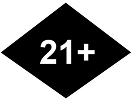
Jakarta, April 28, 2026 — The Film Censorship Board of Indonesia (LSF RI) has identified five key issues based on its internal study as input for the preparation of the academic paper for the revision of Law Number 33 of 2009 on Film. These include the need to clarify the definition of Information Technology Networks (JTI), given that 89 percent of viewing access among children aged 9–18 already occurs through digital platforms; the need to expand audience age classification, particularly between All Ages (SU) and 13+; the conversion of censorship fees into Non-Tax State Revenue (PNBP); institutional transformation from a censorship body to a classification body; and the strengthening of media literacy among the public.
“LSF has prepared documents, including supporting data, for the refinement of this academic paper, based on research and studies conducted in accordance with accountable methodological standards,” said LSF Chair Naswardi during a working group discussion for the preparation of the academic paper for the revision of Law No. 33 of 2009, held at the Ministry of Culture in Jakarta on Tuesday (April 28, 2026).
According to him, the majority of LSF members have expressed readiness to transform from an institution focused solely on censorship practices to one that also implements classification. However, this must be supported by clearer regulations and derivative legal frameworks. One proposal includes changing the institution’s nomenclature to the Indonesian Film Commission, with the primary function of audience classification rather than censorship.
Chair of the Indonesian Film Board (BPI), Fauzan Zidni, welcomed the proposed transformation, noting that the revision of the Film Law is an important momentum to build a system that is more responsive to current developments. “From self-censorship to classification, we must define the direction of the national film sector. Film assessment systems should be understood as part of the broader governance of the film ecosystem, which not only regulates but also educates,” he stated.
Meanwhile, Head of Public Policy at BPI, Rommy Fibri, highlighted that the film industry has become multi-platform, cross-border, and highly complex. “Regulation is still based on a centralized system, with only LSF in place. When discussing OTT (over-the-top services), it becomes complicated because the references vary widely,” he said.
The former LSF Chair for the 2020–2024 period described this condition as structural misalignment: while the industry has advanced rapidly, regulation has lagged behind. He therefore recommended a co-regulation or hybrid regulation model, in which the industry conducts self-rating, while the classification body sets guidelines, conducts audits, and imposes sanctions. “Control is not lost, but becomes more intelligent and systemic,” he emphasized. (Rosalinda/Nuz)