
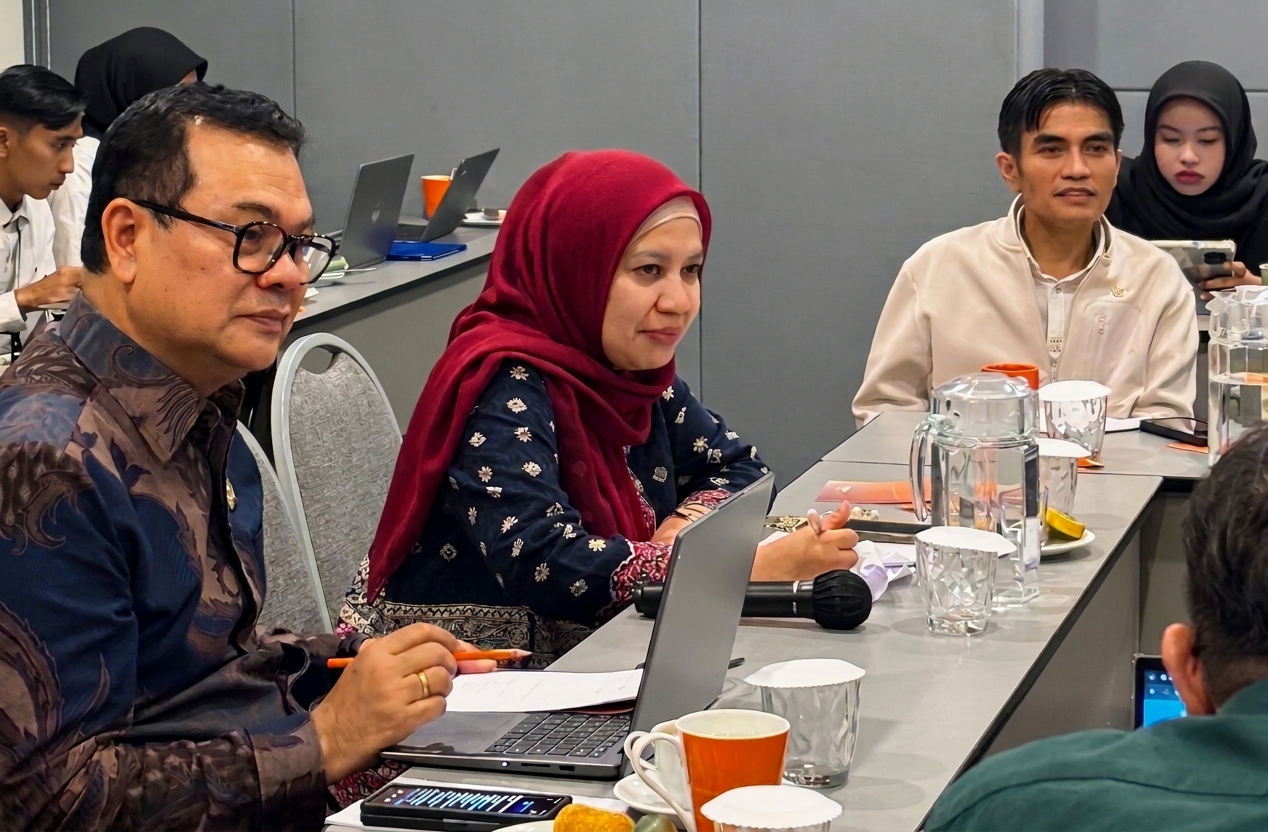
LSF Invites the Ombudsman of the Republic of Indonesia to Strengthen Public Service Transformation
Jakarta, November 9, 2026 — To strengthen the transformation of public services in the film sector, the Film Censorship Board of Indonesia (LSF RI) held a public service quality improvement session in collaboration with the Ombudsman of the Republic of Indonesia in Jakarta on Monday (November 9, 2026). The event aimed to establish credible, inclusive, and impactful public service governance for both the public and film industry stakeholders.
LSF RI Chair Naswardi stated that improving the quality of public services requires a strong commitment from organizational leaders, as well as external evaluation. He emphasized that assistance from the Indonesian Ombudsman is essential to ensure that LSF's service transformation and innovations meet the needs of the public and the film industry.
“Providing good, high-quality public services requires commitment from organizational leaders. This is an absolute necessity,” Naswardi said.
Indonesian Ombudsman Member Maneger Nasution explained that the legal framework governing public services includes Law No. 37 of 2008 on the Ombudsman of the Republic of Indonesia, Law No. 25 of 2009 on Public Services, and Law No. 33 of 2009 on Film.
He also outlined three pillars of public service transformation: credible governance, through clear and accountable services; inclusivity, by ensuring access for all segments of society; and impact, supported by an integrated system covering the entire process from application submission to the issuance of Film Censorship Approval Certificates (STLS).
Maneger Nasution noted that no public complaints regarding LSF's services had been reported during the preceding six months of 2026. However, he emphasized that the absence of complaints does not necessarily mean that services are free from potential problems.
He highlighted three forms of maladministration that must be anticipated: prolonged service delays, procedural violations, and illegal fees.
“Although there have been no complaints, this does not mean that public services are free from problems. It is also important to strengthen standard operating procedures (SOPs), improve service transparency, and evaluate service fees to ensure they remain reasonable and aligned with the needs of the film industry,” he explained.
Meanwhile, LSF RI Vice Chair Noorca Masardi stated that through this initiative, LSF hopes to improve service quality by strengthening institutional commitment, professionalism, information transparency, and the development of digital services.
Assistance from the Indonesian Ombudsman is expected to provide valuable input for evaluating and improving services to make them more transparent, accountable, and responsive to the needs of the public and film industry stakeholders.
These efforts also reflect LSF's commitment to supporting the development of Indonesia's film industry and ensuring that the public can exercise its right to enjoy quality entertainment.
(Ikhda Nisrina Nabila/Tin)